
Managing Excess Cash in the Banking System
Sri Lanka is facing a major surplus of money sloshing around in its financial system, with excess liquidity climbing past Rs.475 billion in recent months. When too much cash floats around, banks have plenty of funds to lend out, which can quickly drive up inflation and put pressure on the country's imports and currency. To keep this money supply under control, the Central Bank of Sri Lanka uses various monetary tools to pull excess cash out of circulation. Central banks typically manage liquidity by adjusting policy interest rates, changing reserve requirements for commercial banks, or buying and selling government securities in the open market.
Conteúdo
Understanding these financial mechanisms helps clarify why the actions taken by monetary authorities matter for everyday people. When banks have too much money, they might lower lending standards or push credit growth too high, which remains above 20% according to recent official commentary. While borrowing can support business expansion and consumer spending when people have stable incomes to make repayments, uncontrolled liquidity can spark rapid price increases. This delicate balancing act requires the Central Bank to continuously adjust its policy stance to protect the broader economy.
Raising the Statutory Reserve Ratio
The Central Bank of Sri Lanka took a direct step to tighten liquidity by raising the Statutory Reserve Ratio, commonly known as the SRR, by 100 basis points to 3% from 2%. Alongside this adjustment, authorities increased the Overnight Policy Rate by 25 basis points. The new SRR requirement takes effect on December 9, 2026. This adjustment marks the first change to the SRR since August 2023, when it was reduced from 4% to 2%, and the first increase since September 2021, when it was raised from 2% to 4%. The policy shift reverses the low reserve policy maintained for years and reflects a much more aggressive approach to cooling down the flooded banking sector.
Requiring banks to hold a higher percentage of their deposits in reserve acts as a mandatory savings rule, forcing commercial institutions to lock away a larger slice of their cash instead of using it to issue new loans. The policy change is expected to absorb around Rs.475 billion in surplus cash down to between Rs.200 billion and Rs.300 billion by the end of the year by pulling approximately Rs.140 billion straight out of the banking system. However, commercial banks often view unremunerated reserve requirements as a heavy tax on their operations because those frozen funds earn no interest.
The Origin of the Restructured Bond Holdings
The current excess liquidity challenge is tied directly to past economic decisions made during turbulent years. Back in 2020, the Central Bank purchased massive volumes of Treasury bills, which is a method of creating money to bridge gaps in economic output during difficult times. That money creation flooded the market with liquidity. When Sri Lanka later carried out its sweeping national debt restructuring, those short-term Treasury bills were converted into long-term government bonds. These restructured bonds featured temporary step-down interest rates for their first two to three years, designed to ease the immediate fiscal pressure on the government.
These step-down bonds created a unique problem for the financial market because their changing interest yields made them extremely difficult to price accurately. Commercial banks and private investors largely avoided purchasing or trading them, leaving the central bank holding a massive pool of assets that could not be easily deployed for open market operations. This lack of a marketable tool forced monetary authorities to rely heavily on reserve requirement changes rather than smoother market transactions to control cash levels.
Transitioning to Plain Vanilla Instruments
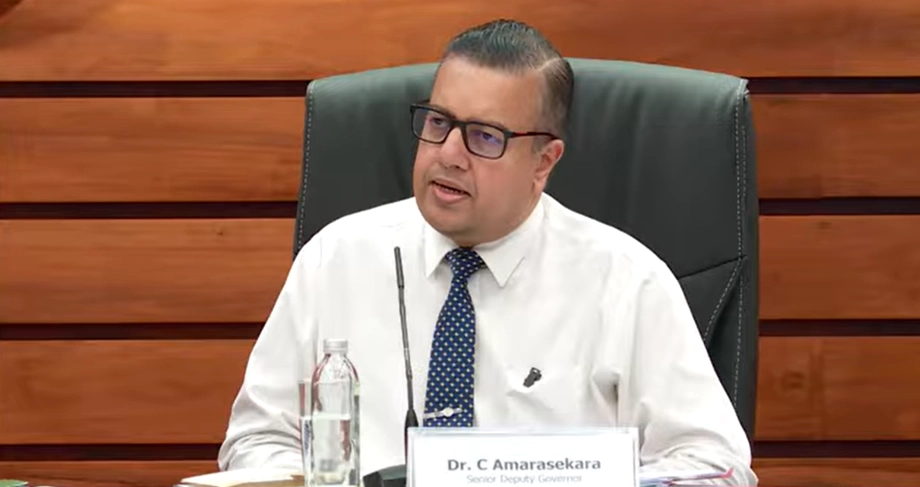
A major shift is coming in March 2027 that will give the central bank a brand new, market-based tool to manage liquidity permanently. Deputy Governor Chandranath Amarasekara explained that the temporary step-down interest rate feature on the restructured government bond holdings will expire in March, converting those assets into standard fixed-rate bonds carrying a 5 percent coupon. In financial markets, these straightforward, predictable fixed-rate securities are widely known as plain vanilla instruments. Once these bonds carry a steady 5 percent return for their remaining maturity, investors and commercial banks will be able to evaluate them easily.
Deputy Governor Chandranath Amarasekara outlined the upcoming structural change clearly when addressing questions about monetary policy tools.
The Treasury bond stock is going to be replaced with plain vanilla instruments from March next year. For the remaining maturity, it will be fixed at 5 percent.
Once the transition takes place, the central bank will be able to sell these standard bonds at a discount so their yields match prevailing market rates. That ability will allow authorities to drain excess rupees from the banking system efficiently after assessing actual investor appetite, eliminating the need to rely exclusively on blunt instruments like bank reserve ratios.
Broader Financial Stability and Climate Pressures
Managing domestic liquidity happens against a backdrop of wider economic vulnerabilities, including the lingering financial shocks from severe weather events. Earlier natural disasters, such as Cyclone Ditwah, caused an estimated USD 4.1 billion in direct physical damage across all 25 districts of the country, a sum equivalent to about 4% of the nation gross domestic product. While the country financial system remained generally stable during the first half of the year, institutions have had to navigate increased credit risks and rising borrower stress. Loan portfolios in vulnerable sectors like agriculture and fisheries face ongoing repayment hurdles as productive assets and household incomes take a hit.
These climate shocks and the resulting credit risks interact closely with the broader financial health monitored through reports like the Financial Stability Review published under statutory guidelines. When borrowers face income disruptions from natural disasters or economic shifts, their ability to service loans diminishes, which in turn places pressure on bank balance sheets and capital buffers. The central bank must therefore balance its liquidity management goals against the reality of supporting a recovering economy where credit growth remains strong but underlying risks still require careful supervision.
What Lies Ahead for Monetary Policy
The combination of higher reserve ratios and the upcoming conversion of restructured bonds into marketable instruments marks a distinct evolution in Sri Lanka monetary management. While the newly raised reserve requirement takes effect on December 9, 2026, liquidity is expected to remain relatively high for some time because the reserve adjustment absorbs only a portion of the total surplus. Officials have not yet specified exact timelines for subsequent bond auctions once the plain vanilla instruments become available in March 2027, leaving the exact pacing of future liquidity absorption dependent on upcoming market conditions.
These policy adjustments change the daily operating environment for commercial banks and borrowers across the country. Higher reserve requirements reduce the pool of funds available for lending, while the future introduction of marketable bonds will give authorities a flexible mechanism to fine-tune money supply without penalizing banks through unremunerated reserves. Market participants will watch closely to see how effectively these tools bring outstanding liquidity down to target ranges by the close of the year.
The Essentials
- The Central Bank of Sri Lanka raised the Statutory Reserve Ratio by 100 basis points to 3% from 2%, effective December 9, 2026.
- The reserve requirement increase is expected to absorb roughly Rs.140 billion from the banking system, reducing excess liquidity to between Rs.200 billion and Rs.300 billion by the end of the year.
- Excess liquidity in the banking system had recently surged to record levels exceeding Rs.475 billion.
- Deputy Governor Chandranath Amarasekara announced that restructured government bond holdings will convert into standard 5 percent fixed-rate plain vanilla instruments starting in March 2027.
- The converted bond stock will provide the central bank with a market-based tool to permanently absorb excess cash by selling securities at a discount to match market yields.