
Union Home Minister Arrives Amid Protests
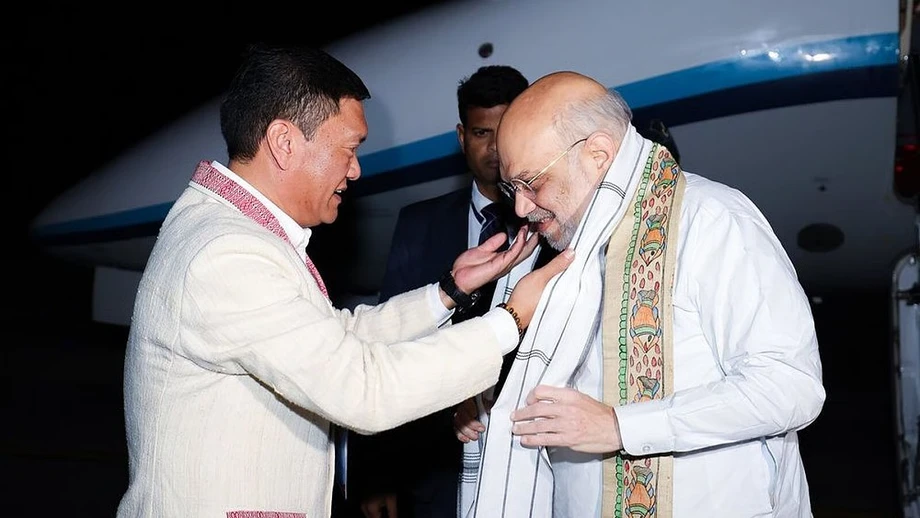
Union Home Minister Amit Shah arrived in Arunachal Pradesh on Friday night for a three-day visit. His trip to the frontier state comes amid sustained protests against the proposed Siang Upper Multipurpose Project (SUMP). The agitation against the mega dam has spread from the Siang Valley to the state capital Itanagar and neighbouring Assam. Local residents and indigenous groups fear the loss of ancestral land, displacement, and environmental damage. Chief Minister Pema Khandu announced the visit in Itanagar and stated that a review meeting has been proposed to discuss key issues facing the state.
Conteúdo
Security measures for the visit are tight across the region. Authorities declared the entire Papum Pare district a no fly zone from November 20 to 22. The director-general of the CRPF, G.P. Singh, and Assam Rifles chief Lt. Gen. Vikas Kumar Lakhera arrived in Itanagar ahead of the home minister to review security arrangements.
Protesters have raised multiple grievances regarding the handling of the agitation. The Arunachal Pradesh Congress Committee (APCC) on Thursday stated that the Centre must give a clear written assurance that SUMP will not be imposed against the informed wishes of affected indigenous communities. The party also questioned why a lasting political settlement has remained elusive in neighbouring Manipur.
Anti-SUMP protesters are demanding the release of all individuals arrested in connection with the agitation, the withdrawal of central forces, and an immediate halt to pre-feasibility report activities. The People's Forum Against Big Dam organised a demonstration in Assam's Tinsukia district on Friday with participation from organisations based in Arunachal Pradesh. Chief Minister Pema Khandu held a meeting with senior officers on Thursday to review arrangements for the high-level visit.
Memorandum Sent Over Siang River Concerns
The Adi Ba:né Kébang United (ABKU), which is the apex council of the Adi tribe, and the Siang Indigenous Farmers Forum (SIFF) approached the home minister with a joint memorandum on Friday, November 20. The organisations demanded that no dam be built across the Siang River. The memorandum was signed by ABKU president Dijhi Tamuk, general secretary Jirbo Jamoh, SIFF president Nobeng Burang, and general secretary Likeng Libang.
According to the memorandum, the proposed dam would affect the Adi community the most. The project is an idea dating back about 45 years that was rejected twice by previous governments before being revived in 2024. If completed, the 11,200-MW project would become India's largest hydropower project.
The organisations stated in their memorandum that while the people of the state are not against any development project or even dam construction, it should not be like the 11,200 MW SUMP over the Siang River, though people are willing to allow smaller dams on tributaries. They alleged that the state government and the NHPC initiated pre-feasibility report (PFR) activities in 2024 without following basic standard operating procedures, without providing adequate education and awareness to affected tribal people, and without proper consultation. They added that authorities failed to maintain transparency, offering no proposal for rehabilitation of those displaced or plans for alternative agricultural land and livelihoods. NHPC's May 2025 Key Information Document stated that the pre-feasibility report was submitted to the Ministry of Jal Shakti on December 30, 2022, while further survey and investigation activities continue for the detailed project report. NHPC has not yet issued an official response or statement addressing these specific allegations of inadequate consultation and the initiation of activities without standard operating procedures.
The memorandum accused authorities of using misleading assurances, the fear of a Chinese water bomb, temptation, and divide-and-rule tactics to advance the project. Protesters also alleged that central security forces, mass arrests, and the misuse of the Arunachal Pradesh Unlawful Activities Prevention Act were deployed to intimidate opponents. They further cited reports alleging that detained activists had been tortured in custody.
Demands for Judicial Inquiry and Detainee Release
Protesters have called for a judicial inquiry into an incident on October 23 in Pasighat. During the unrest, security personnel allegedly used tear gas and stun grenades without provocation, while an NHPC office and other properties were targeted. Around 69 to 75 or more people were arrested or detained in connection with the agitation, with some later released in early November as a goodwill gesture by the state government.
The ABKU and SIFF memorandum demanded the immediate release of detained youths, the withdrawal of FIRs against protesters, the removal of the Rapid Action Force and other central armed forces from Upper Siang and Siang districts, and a judicial inquiry into the October 23 incident. The organisations clarified that they are not opposed to all development and would accept smaller dams on the tributaries of the Siang River, which the Adi community reveres as a mother.
They expressed willingness to hold discussions with the government on equality terms, but stated they would not participate in negotiations conducted under pressure or intimidation. The groups also pointed to contradictory statements by political representatives, noting that while Chief Minister Pema Khandu assured the public that no dam would be constructed without public consent, MP Tapir Gao, Minister Ojing Tasing, and some Adi MLAs indicated the project would proceed.
Home Minister Promises Dialogue and Rehabilitation
Union Home Minister Amit Shah spoke at the Police Training Centre in Banderdewa on Saturday, November 21, telling Siang Valley residents that the government would address their concerns through dialogue. He also promised a rehabilitation and resettlement package for people affected by the project. Shah said he had learnt of local apprehensions through media reports and acknowledged the significance of the issues raised.
I want to assure my brothers and sisters from Siang that we will find a way forward through positive dialogue... You need not worry about it.
Shah stated that the government would balance local aspirations with Arunachal Pradesh's development potential, economic and security interests, and the country's energy security. He described the Siang Upper Multipurpose Project as an undertaking of national importance crucial to the state's revenue and India's energy security, promising one of the country's most attractive rehabilitation and resettlement packages for displaced residents.
The Yarlung Tsangpo river flows from Tibet into Arunachal Pradesh as the Siang and continues into Assam as the Brahmaputra. The Centre views the proposed dam as a method to generate hydropower, regulate river flows, and strengthen India's energy and water security while creating jobs and infrastructure.
Security Review and Border Management
Governor Lt. Gen. K.T. Parnaik met with CRPF Director-General G.P. Singh and Assam Rifles chief Lt. Gen. Vikas Kumar Lakhera in Itanagar ahead of the home minister's arrival. During his interaction with Singh, Governor Parnaik flagged Arunachal Pradesh's vulnerability to landslides, floods, and earthquakes, advising the CRPF to strengthen its disaster response capabilities.
In his meeting with Lakhera, the governor discussed border security, expediting border fencing in Longding, Tirap, and Changlang districts, and strengthening coordination among security forces deployed in border areas. Arunachal Pradesh shares an 1,863-kilometre international boundary with China, Myanmar, and Bhutan. The governor stressed the importance of timely intelligence sharing and real-time information exchange among security agencies.
Opposition to large hydropower projects has surfaced elsewhere in the state. On October 26, protests were reported against the proposed 1,605-MW Subansiri Upper Hydroelectric Project, also known as the Menga Dam, reflecting growing concerns among communities over major infrastructure plans.
Official Itinerary and Engagements
Shah's schedule during his three-day tour includes multiple official engagements focusing on security, border management, and infrastructure development. On Saturday morning, he presented the President's Police Colour to the Arunachal Pradesh Police at the Parade Ground of the Police Training Centre in Banderdewa, followed by a Bada Khana with police personnel.
Later on Saturday at 2:30 pm, Shah chaired a high-level review meeting at Lok Bhavan in Itanagar to discuss development projects, border security, and state priorities. On Sunday, November 22, he attended a programme at the Dorjee Khandu State Convention Centre to unveil the Arunachal Pradesh Cooperation Vision Document 2047, distribute appointment letters to newly recruited government personnel, present Cooperation Awards, and inaugurate the Saras Mela.
Later on Sunday afternoon at approximately 3:45 pm, Shah visited Hollongi near Itanagar to inaugurate the new campus of the 12th Battalion of the National Disaster Response Force before departing for New Delhi.
At a Glance
- Union Home Minister Amit Shah arrived in Arunachal Pradesh on Friday for a three-day visit amid protests against the 11,200-MW Siang Upper Multipurpose Project.
- Adi tribal organisations ABKU and SIFF submitted a joint memorandum detailing concerns over pre-feasibility report activities, inadequate consultation, and demanding the immediate suspension of PFR activities, release of detained protesters, and withdrawal of central forces, while NHPC has yet to issue an official response.
- Shah assured residents in Banderdewa on Saturday that the government would address concerns through positive dialogue and offer an attractive rehabilitation package.
- State Governor Lt. Gen. K.T. Parnaik met with security chiefs to discuss border fencing in Longding, Tirap, and Changlang districts.
- The home minister presented the President's Police Colour to the Arunachal Pradesh Police and unveiled the Arunachal Pradesh Cooperation Vision Document 2047.